
How might we...
increase engagement in a utility app without eroding trust?
TLDR
Vodafone Group needed to increase engagement in their mobile service app across 21 global markets.
But here's the problem: it's a utility app. People naturally only check it once a month. How do you create more frequent engagement without manipulating users into buying things they don't need?
THE PROBLEM
Naturally low engagement (monthly check-ins). Need more frequent usage without manipulative tactics.
THE INSIGHT
Users want connection over monetary rewards. They're wary of gamification that pushes sales.
THE APPROACH
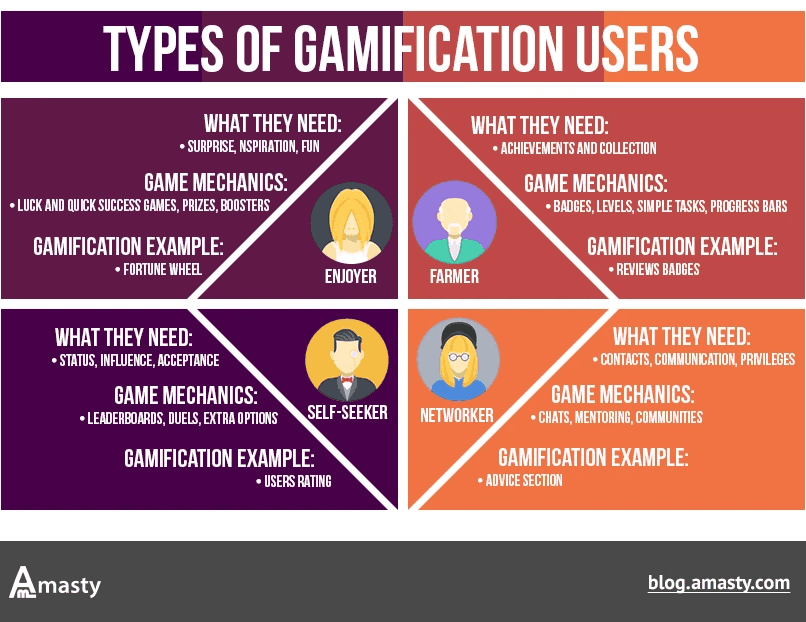
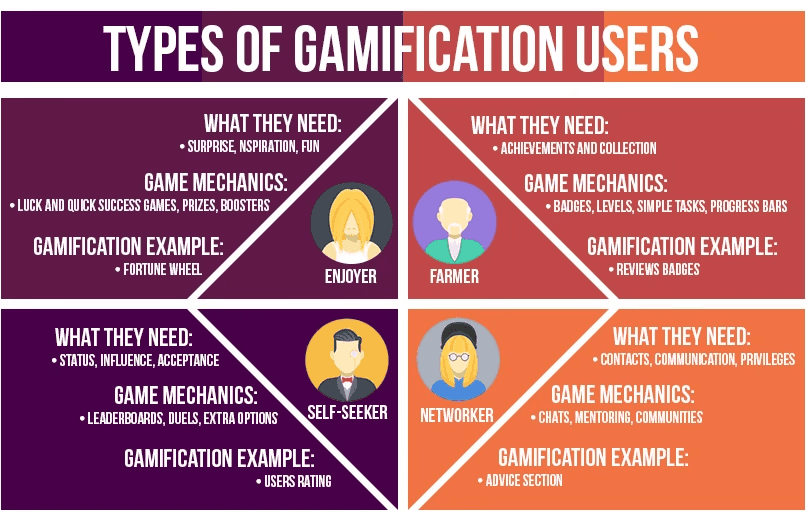
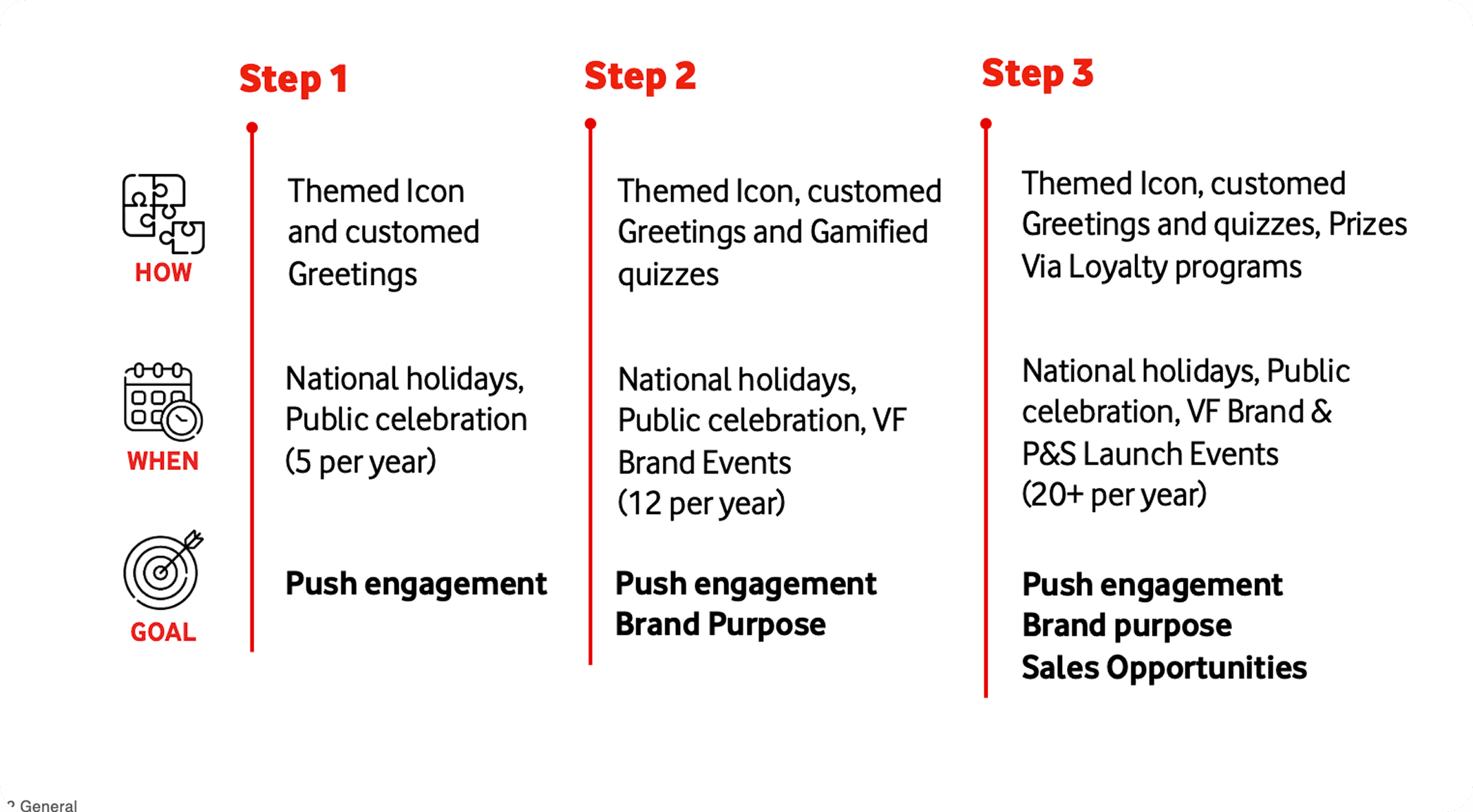
Modular gamification system using Archetypes framework. Genuine delight mechanics, customisable for 21 markets.
MY ROLE
Squad Lead. Led small UX/UI team, created base concepts, ran workshops, conducted research and testing.
MY IMPACT
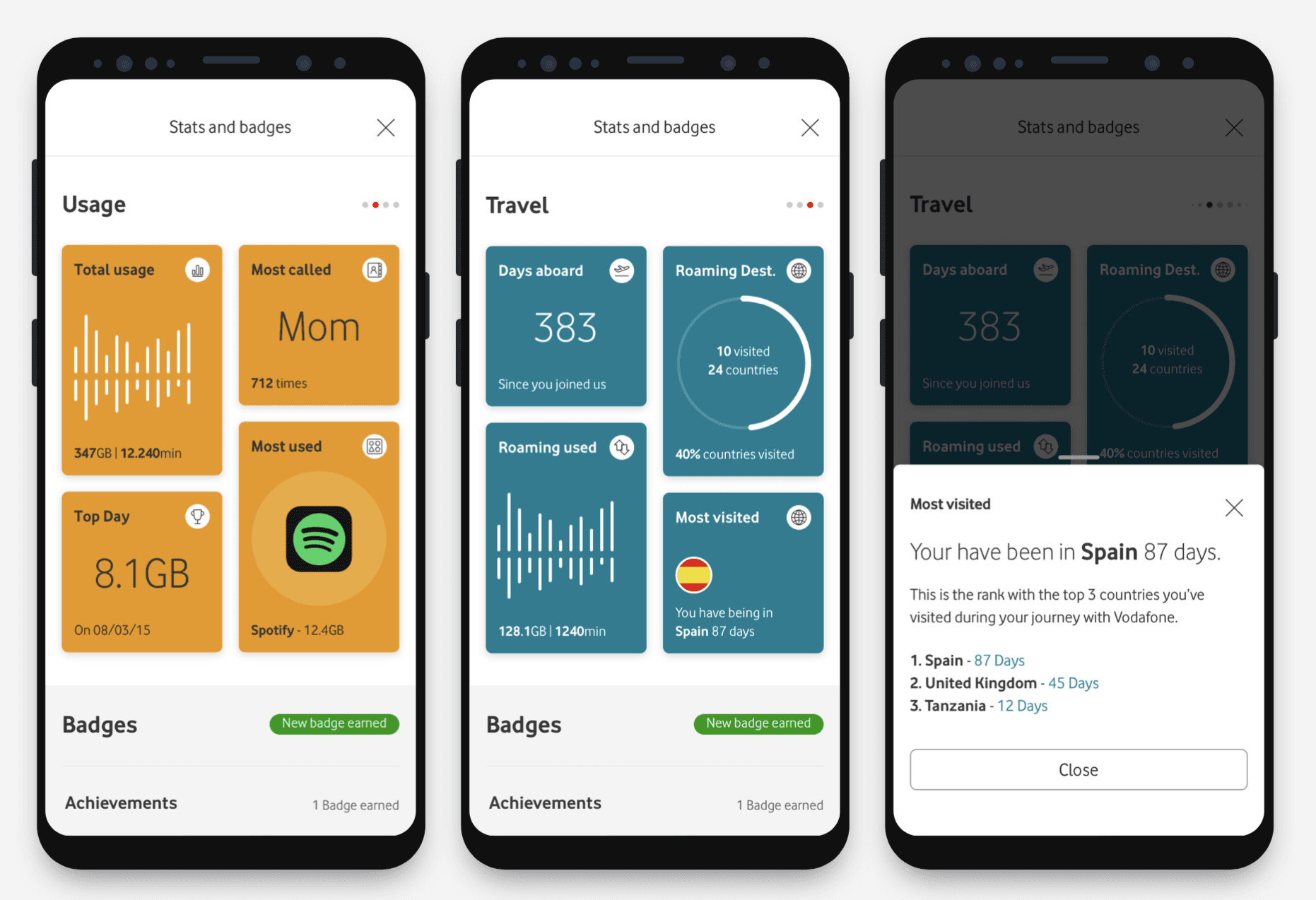
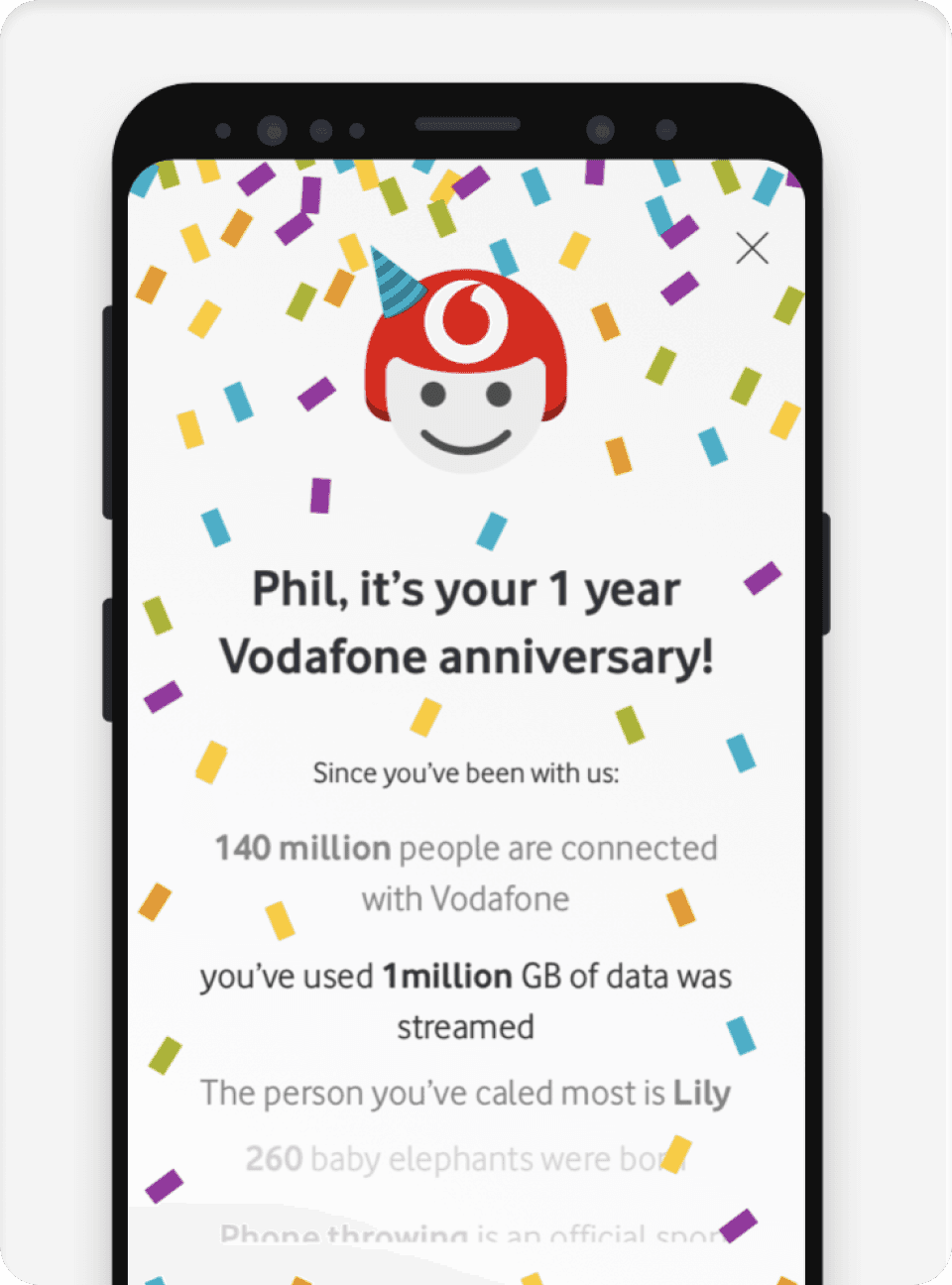
SUS score 85 (A) across 100+ users, UK market saw increased engagement after implementing "year in review", contributed to Webby Award for MyVodafone app.
GETTING STARTED
The utility app engagement paradox
The brief: increase engagement for a telco utility app.
Vodafone Group designs for local markets—Vodafone UK, Germany, Turkey, South Africa, and 17 others across Europe and Africa. We created design systems, assets, and journeys that could adapt to fit different market needs. A lot of what we supplied markets was foundational and functional - but there was a big internal push to go beyond function and go into 'fun'.
Here's the problem with that: MyVodafone is a utility app. People check their balance, maybe top up credit, review their bill. That's it. Once a month if they're frequent users. This is completely normal utility app behavior.
But several markets had quite low engagement even by utility standards. And one market—Italy—had found success with gamification mechanics that got users to engage more frequently, explore more services, and buy more products.
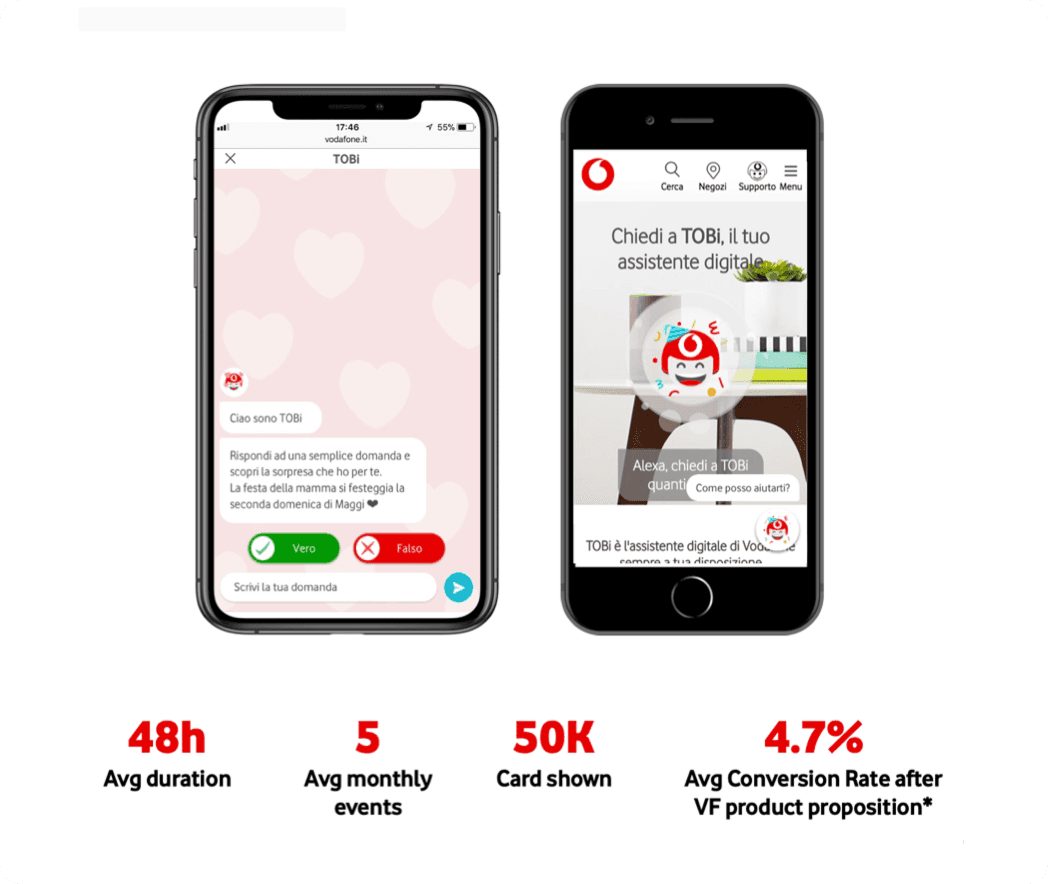
The question wasn't "should we do gamification." Italy proved it could work. The question was: how do we scale this across 21 markets with different cultures, needs, and commercial priorities, without manipulating users?
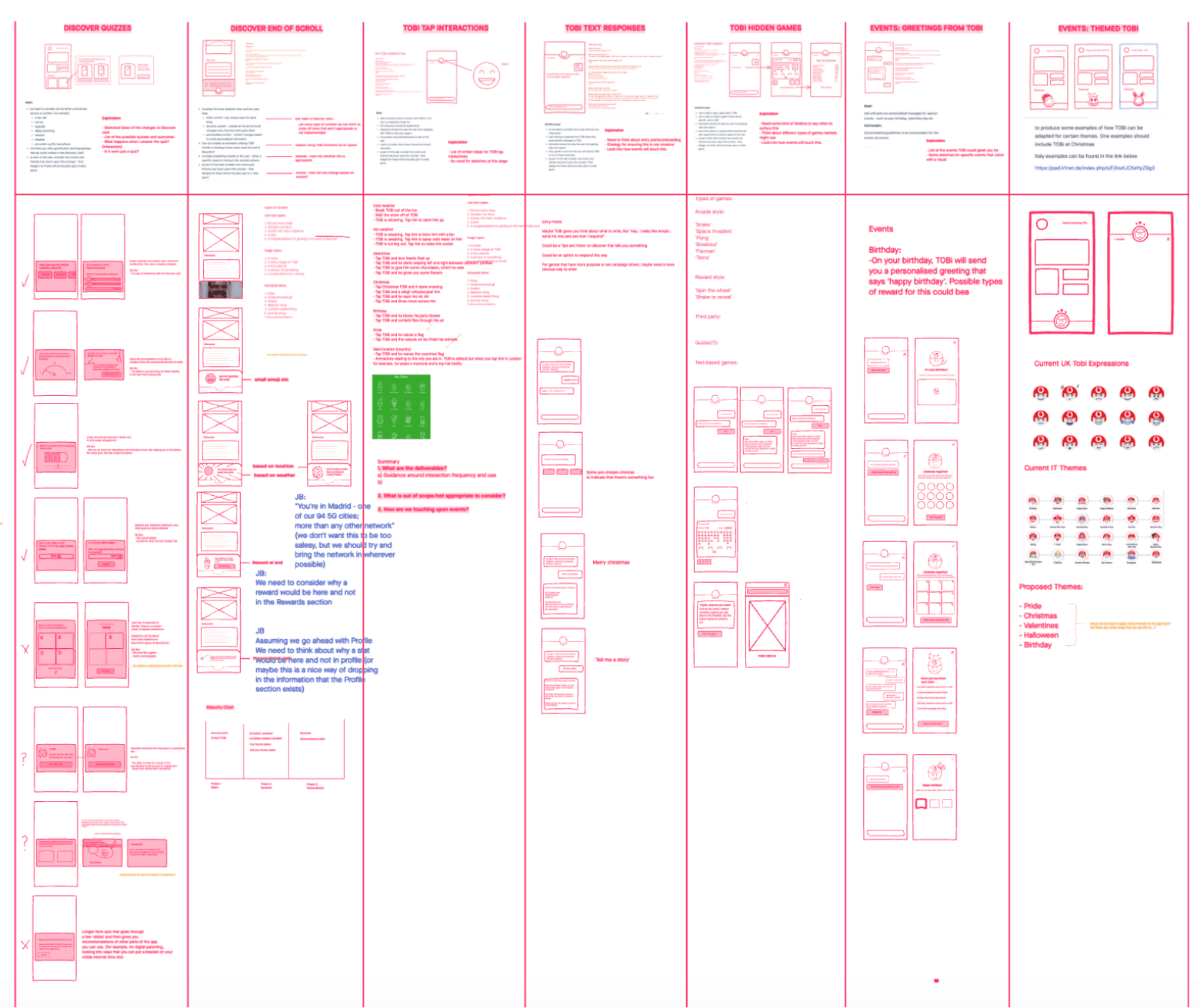

Spinning wheels for rewards
Rejected. Users see these as manipulative. They know it's rigged. It creates distrust.
Tiny discounts that funnel to purchase flows

APPROACH
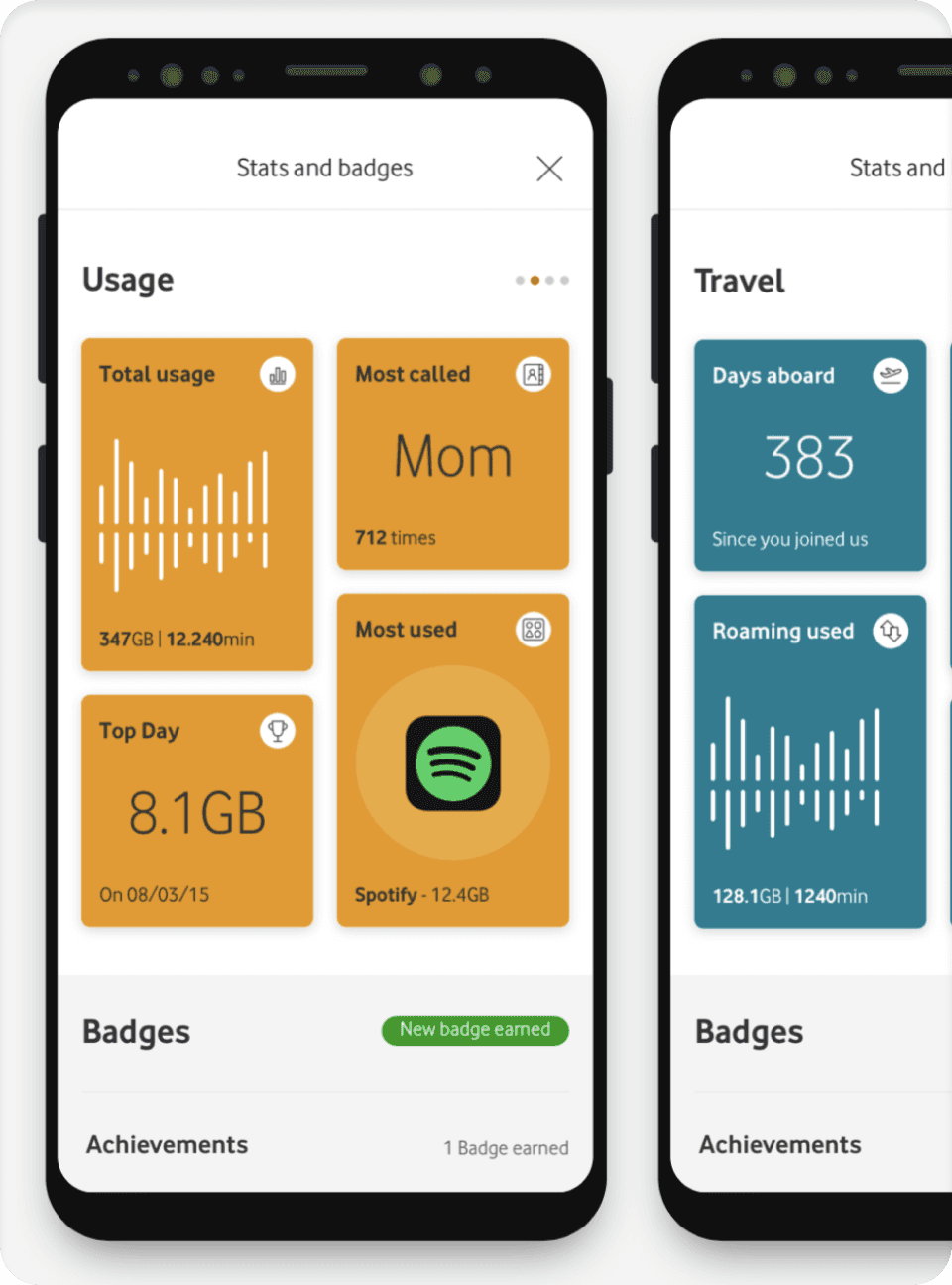
What we built: delight over transactions

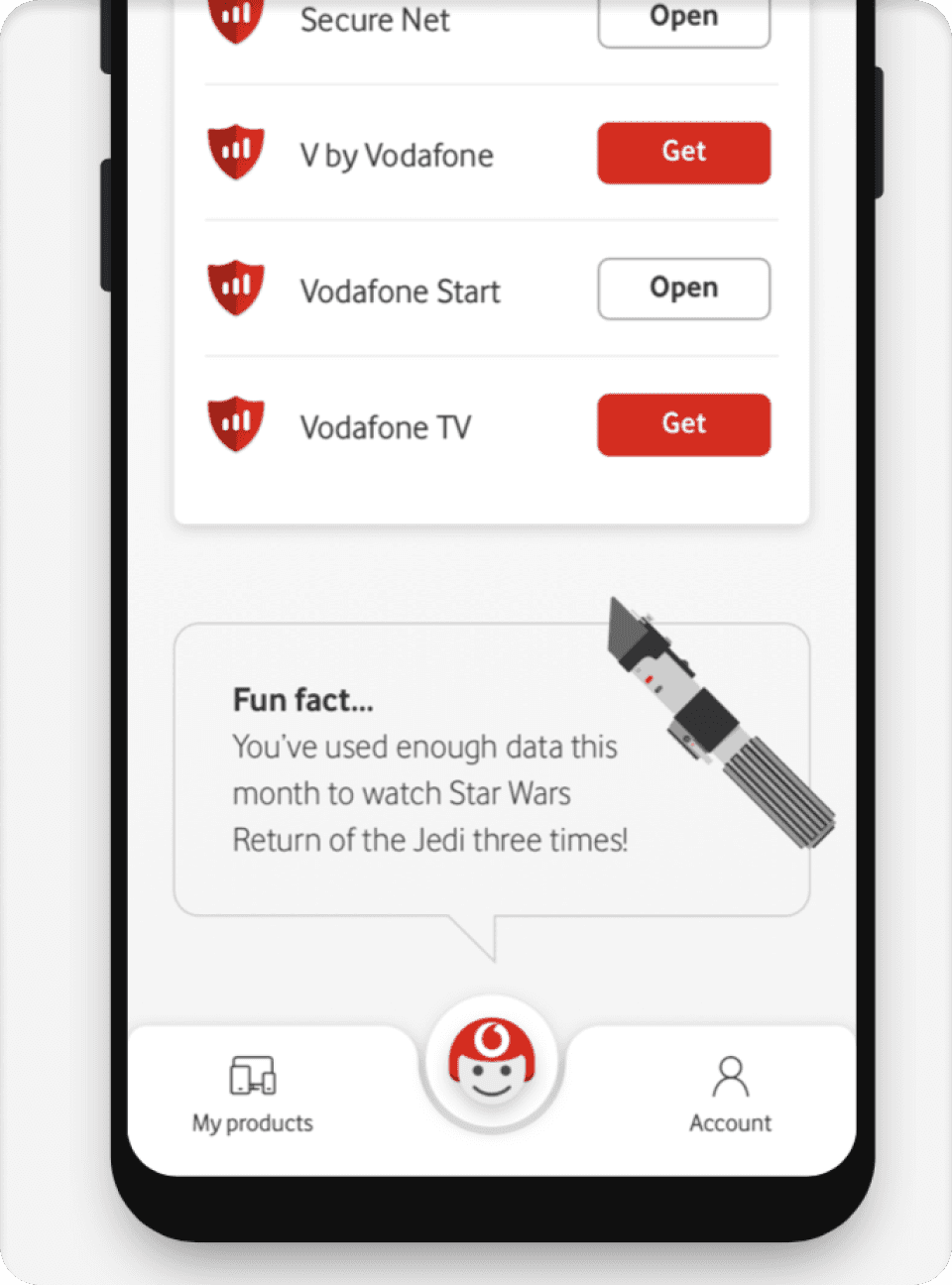
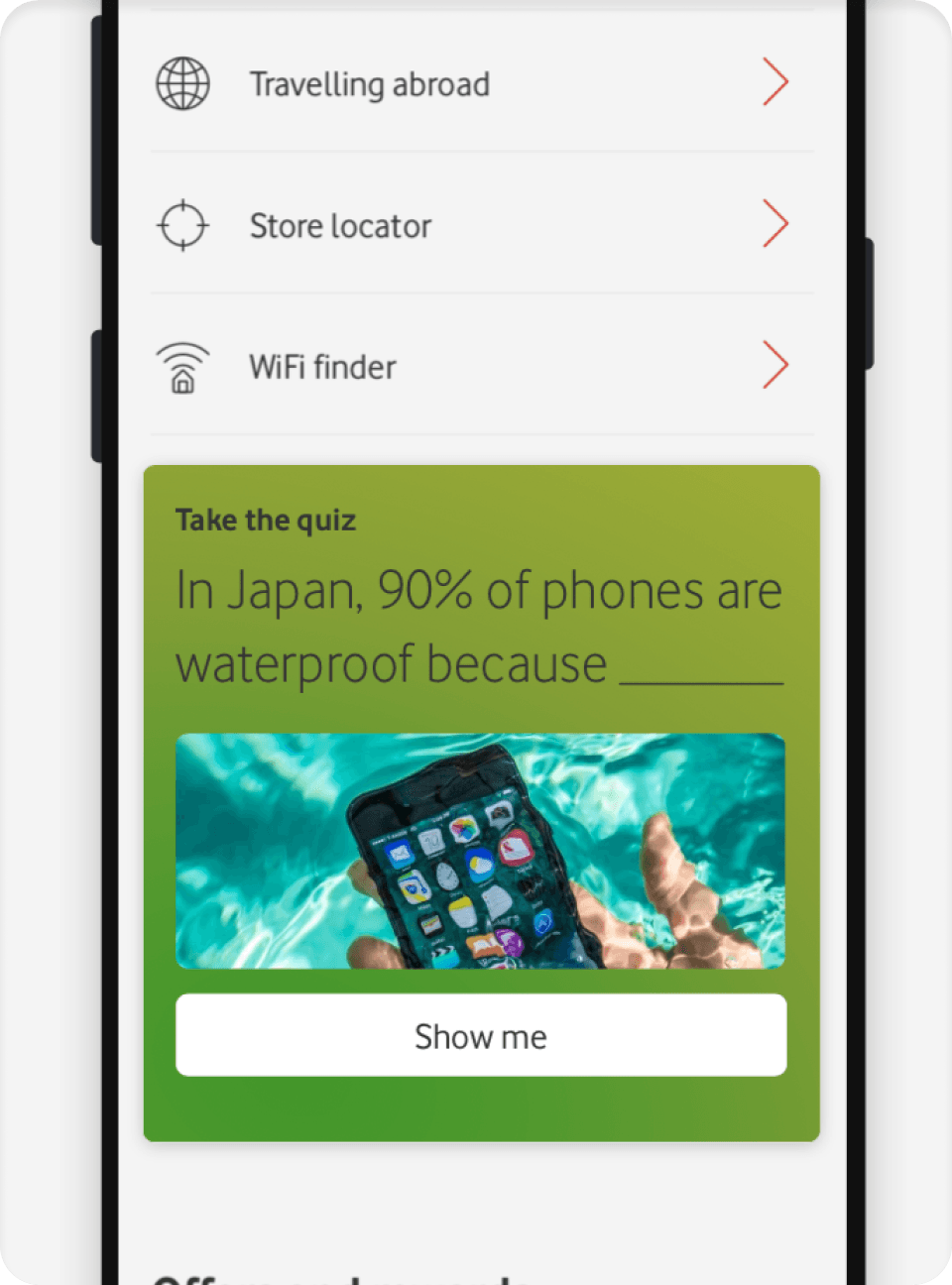
SCALE ISSUES
Designing modular systems for 21 markets
This wasn't just "design gamification." It was "design a gamification system that works across 21 different markets with different:
Cultural contexts
User behaviors
Commercial priorities
Technical capabilities
Regulatory environments
The Gaming Archetypes framework gave us the structure. The modular component system gave us the flexibility. Markets could implement what worked for their users without rebuilding from scratch.
We also built extensive documentation and workshops to help local market teams understand:
Which mechanics worked for which user types
How to customize for local culture
When to use intrinsic vs. extrinsic motivation
How to avoid manipulative patterns
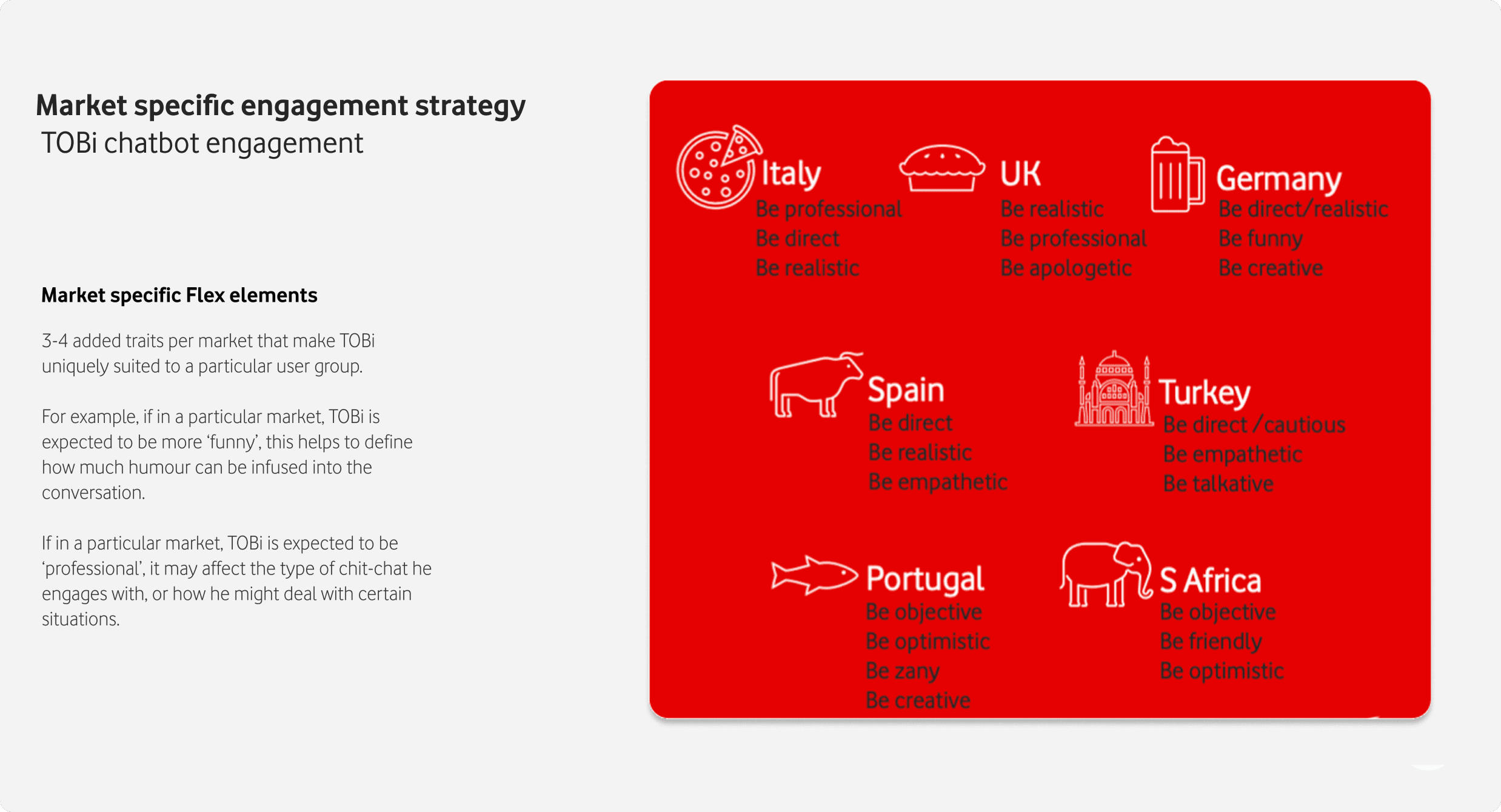
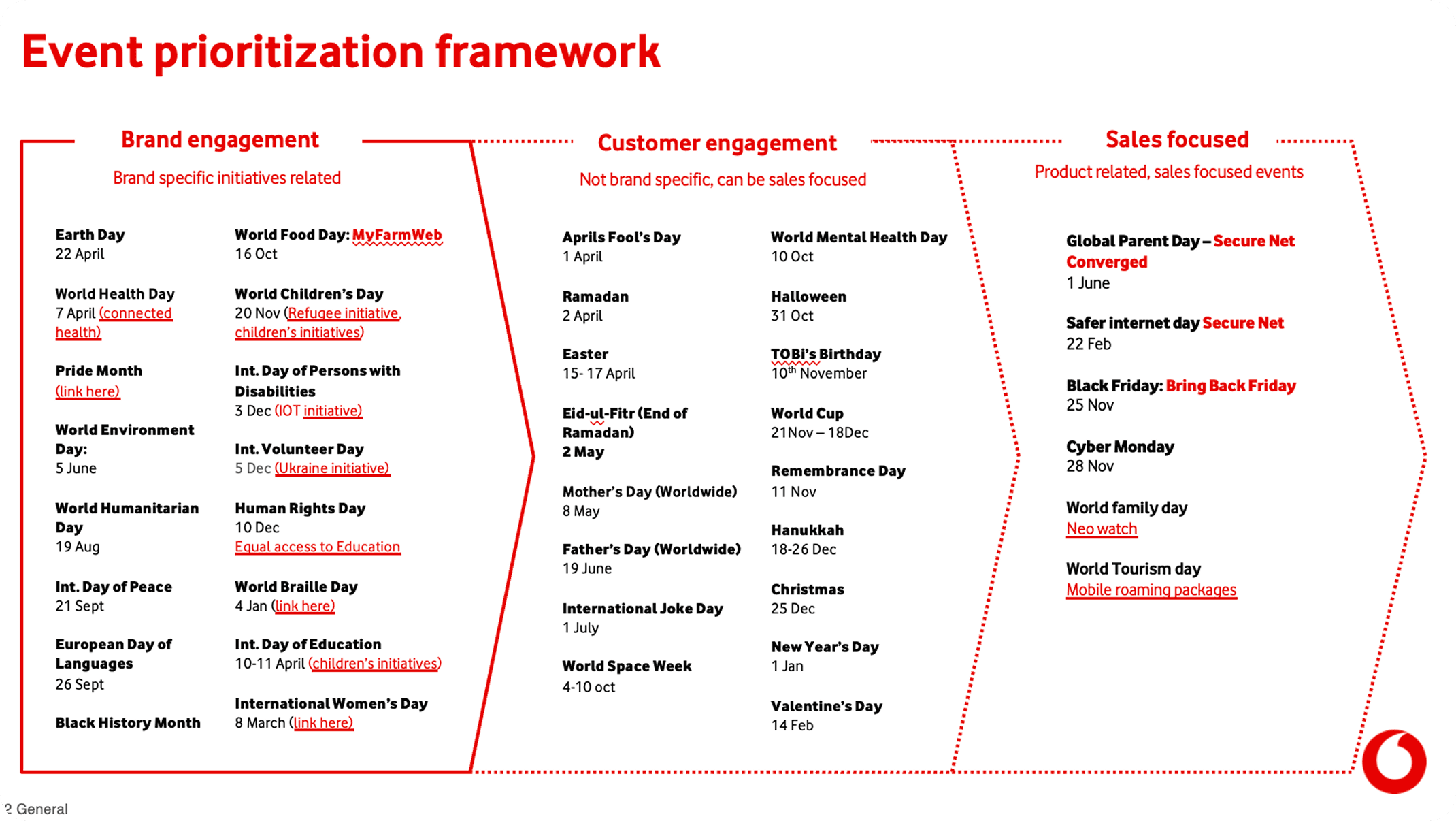
Using a 'fix flex free' model, we were able to articulate what would work best in each cultural context:
Impact: Delight that actually worked
USER SATISFACTION
SUS score: 85 (A)
across 100+ users in testing. High usability, positive sentiment.
UK METRICS
UK market implementation
"Year in review" launched 6 months later, saw measurable increase in app engagement.
AWARDS
Webby Award 2021
The MyVodafone app (MVA10) that included this gamification work won a Webby Award. I'm named on it. (not to brag or anything)
KEY LEARNINGS
Ethical gamification: What I learned
Gamification gets a bad reputation because it's often used manipulatively. Spinning wheels. Fake urgency. Dark patterns disguised as "game mechanics."
But gamification isn't inherently manipulative. It's a tool. The question is: are you using it to extract value from users, or create value for them?
We chose the latter. And it worked.
The research insight—that users want community and connection over monetary rewards—completely changed the design direction. We could have built a system that pushed sales in the short term and destroyed trust in the long term. Instead we built genuine delight that opened space for commercial value when it was contextual and helpful.
Designing for 21 markets taught me to think in systems, not features. The Gaming Archetypes framework gave us structure. The modular components gave us scale. And the ethical foundation—rejecting dark patterns—made it sustainable.
Also: sometimes the most strategic thing you can do is say no to stakeholders who want immediate conversion. Building trust takes longer, but it's worth more.
Ready to see more?
Click through to the next case study for more high-octane UX fun
See next case study: ZavaMed Dosage Guide